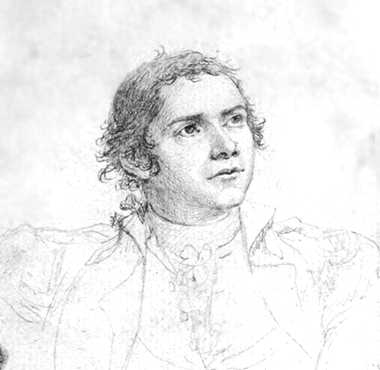
Hugh Mercer
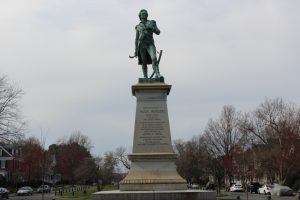
Inscription:
Sacred to the memory of Hugh Mercer, Brigadier-General in the Army of The United States; He died on the 12th of January, 1777, of the wounds he received on the 3d of same month, near Princetown, in New Jersey, bravely defending the Liberties of America. The Congress of the United States in testimony of his virtues, and their gratitude, have caused this monument to be erected.
Research:
Hugh Mercer was born January 17, 1726, in Scotland. Before coming to America, Mercer became a doctor after studying medicine at the University of Aberdeen.

In 1745, Mercer was a surgeon for the army and involved in the Battle of Culloden; part of the Jacobite rising against the British government who reigned victorious(1). Because of his Jacobite background, he was in danger living in Scotland so he fled to America in what is now Pennsylvania where he made a living as a doctor(2).
In 1755, the French and Indian War broke out and Mercer decided to fight for the colonies as a soldier. After only one year Mercer became a captain for a Pennsylvania regiment and helped John Armstrong raid the Native American village of Kittanning (3). This battle affected Mercer greatly as he was badly wounded, without a horse and a weapon, and unfortunately, separated from his men (4).
In Mercer’s condition, he still managed to walk one hundred miles in the span of fourteen days with little to no supplies eventually coming upon Fort Shirley. He was acknowledged for his strength and bravery and soon rose to a ranking Colonel. As a colonel, he befriended George Washington and they fought in numerous battles together (4).
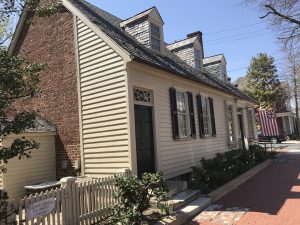
After the war in 1760, Mercer moved to Fredericksburg, Virginia and started his medical practice and apothecary where he practiced for fifteen years(5). He became a prominent member of the community as a member of the committee of safety and even served as George Washington’s family physician (6). In 1774, Mercer bought Ferry Farm, George Washington’s boyhood home, from Washington for two thousand pounds(7). He would marry Isabella Gordon and raise five children together (8).

In 1775, on the eve of the outbreak of the Revolution, the new Congress made Mercer an officer for the Continental army(9). Mercer truly showcased his leadership during the American Revolution as the defender of Fort Lee and later one of the main executors of George Washington’s plan to cross the Delaware River at the Battle of Trenton in 1776. During the Second Battle of Trenton, Washington entrusted Mercer to defend the city in 1777. Following this victory, Mercer and his men were attacked by the British at the Battle of Princeton. Mercer was mistaken for George Washington, who incidentally on his way there, was stabbed seven times by bayonet (9).
Washington arrived at the site and helped Mercer’s men fight back victoriously against the British. Mercer somehow survived the battle and was taken to a field hospital where he died nine days later on January 12, 1777 (10).
Featured Image:
“Hugh Mercer Brigadier General,” Civil War Trust, https://www.civilwar.org/learn/biographies/hugh-mercer.
(1) John Tackett Goolrick, The Life of General Hugh Mercer: With Brief Sketches of General George Washington, (New York: Neale Pub. Co., 1906), 13.
(2) Ibid.
(3) Paula S. Felder, “Hugh Mercer: An Unexpected Life,” Fredericksburg (VA) Freelance Star, September 4, 2004. http://www.fredericksburg.com/town_and_countylocal_history/hugh-mercer-an-unexpected-life/article_18180cce-46cc-5aaf-b161-d872ed0b3cc4.html, (accessed April 1, 2018).
(4) Ibid.
(5) “Hugh Mercer Apothecary Shop,” Washington Heritage Museum, https://www.washingtonheritagemuseums.org/museums, (accessed April 1, 2018).
(6) Francis F. Wilshin, “Fredericksburg in the Revolution,” In The Fredericksburg Connection, ed. Susanne Steiner Hintz and Laura Daughtry Smart, (Fredericksburg, VA: Historic Fredericksburg Foundation, 1980), 32.
(6)”Hugh Mercer,” Mount Vernon, http://www.mountvernon.org/digital-encyclopedia/article/hugh-mercer/, (accessed April 1, 2018).
(7) Ibid.
(8) Jeff Dacus, “Hugh Mercer: Doctor and Warrior,” Journal of the American Revolution, https://allthingsliberty.com/2017/01/hugh-mercer-doctor-warrior/, (accessed April 1, 2018).
(8) Felder, Freelance Star.
(9) Ibid.
(10) Ibid.
(11) “General Hugh Mercer,” Revolutionarywar.net, https://www.revolutionary-war.net/hugh-mercer.html.
(12) Lakelyn Wiley, “Hugh Mercer’s Apothecary Shop in Fredericksburg, Virginia,” 2018.
(13)John Trumball, “The Death of General Mercer at the Battle of Princeton, January 3, 1777,” Revolutionarywar.net, https://www.revolutionary-war.net/hugh-mercer.html.